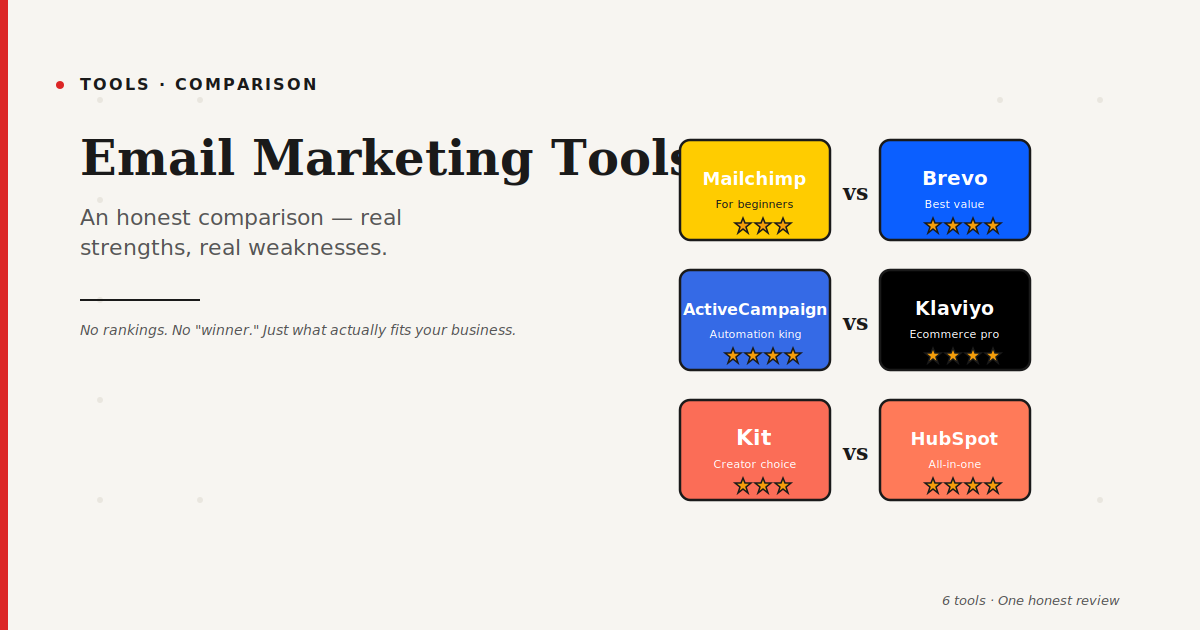
The Best Email Marketing Tools Compared (An Honest Review)
A practical comparison of the best email marketing tools — Mailchimp, Brevo, ActiveCampaign, Klaviyo, and more. Real strengths, real weaknesses.
Apr 23, 2026
10 min read561 views
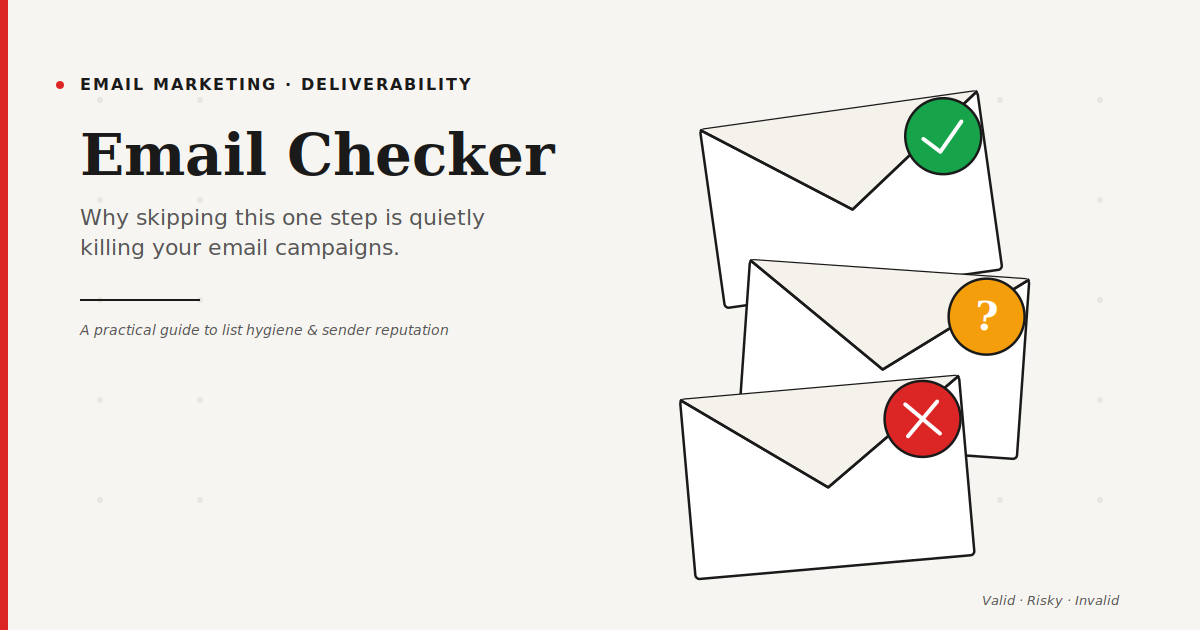
A few years ago, I sent a marketing email to a list I thought was clean. It wasn't. The bounce rate was so ugly that my sending domain got flagged for weeks. A friend in deliverability looked at me and said, "You didn't run it through an email checker first, did you?"
Nope. I hadn't. And honestly, I hadn't even thought about it.
That's the thing about email checkers. Nobody really talks about them until something goes wrong. And by then, it's usually too late.
An email checker (sometimes called an email verifier or email validator) is a tool that takes an address and tells you whether it's real, fake, risky, or outright dead. It sounds boring on the surface. But what's happening underneath is actually kind of interesting.
A good email checker doesn't just look at the format. It goes deeper. It checks the syntax, looks up the MX records of the domain, pings the mail server quietly to see if the inbox actually exists, flags disposable addresses (those 10-minute email services), catches role-based addresses like info@ or support@, and tries to spot catch-all domains, where every email "works" but nothing actually lands.
Think of it like a bouncer at a club checking IDs before letting people in. Except the club is your sender reputation, and every fake ID you let through costs you.
Here's a number that surprises people: industry benchmarks generally put a "healthy" bounce rate under 2%. Mailbox providers like Gmail and Outlook watch this closely. Go above 5% and you start getting throttled. Go above 10% and you're in real trouble.
The scary part? Most lists that haven't been cleaned in a while sit somewhere between 8% and 15%. Email addresses decay. People change jobs. Companies shut down. Typos happen. A list that was perfect six months ago is slowly rotting in the background.
An email checker is basically the cure for that rot.
Okay, the practical bit. You've got a list. Maybe it's 500 contacts, maybe it's 50,000. What do you actually do?
First, upload your list. Most email verification tools accept CSV files or integrate directly with platforms like Mailchimp, HubSpot, or Brevo. Then run the scan. Depending on size, this takes anywhere from a few minutes to a few hours.
Read the results carefully. You'll usually get categories: valid, invalid, risky, unknown, and sometimes "accept-all." This is where people mess up. Don't just delete everything labeled "risky." Some risky emails are still real. Segment them, send warm-up content first, and watch the engagement.
One thing I've learned the hard way: don't trust a tool that promises "100% accuracy." No email checker is truly 100% accurate, because some mail servers lie on purpose to protect users from spammers. Anyone claiming perfection is selling you something.
Free email checkers exist, and they're fine for one-off checks. Need to verify a single address before sending a proposal? A free tool does the job.
Running a whole list, though? That's a different game. Paid tools like NeverBounce, ZeroBounce, Bouncer, Hunter, and Emailable do the heavy lifting. Prices usually land around $5 to $10 per thousand verifications, sometimes less in bulk.
Is it worth the money? Compare it to what a deliverability crisis costs. Even one week of blocked sending for a business that relies on email is brutal. The math almost always works out.
Quick clarification, because I see people confuse these constantly.
An email finder finds someone's address when you only have their name and company. Think of it as a search tool.
An email checker verifies whether an address actually works. Think of it as a validation tool.
Some platforms do both. Hunter is a classic example. But they're very different jobs, and a tool being great at one doesn't mean it's great at the other.
Let me paint a picture. You run a cold email campaign to 10,000 contacts. You skipped verification to save time. Here's roughly what happens.
Around 1,200 hard bounces slam your sending domain in the first hour. Your IP reputation drops. Gmail starts routing your emails to spam, even the ones going to valid recipients. Reply rates crash. And you blame the copy, the offer, the subject line.
But the copy was fine. The offer was fine. Your sender reputation was quietly wrecked before anyone even read your first sentence.
That's why experienced senders treat email verification as non-negotiable. Not because it's trendy. Because they've seen what happens without it.
You might not be sure if this applies to you. Some honest signals:
Your open rates have been trending down for no obvious reason. You haven't cleaned your list in more than six months. You bought, scraped, or imported a list from somewhere. Your last campaign had more bounces than usual. You're about to run a big re-engagement push.
If even one of those feels familiar, run a verification. It's cheap insurance.
When you're picking a tool, ignore the flashy homepage. Look at what actually matters.
Real-world accuracy, first. Anything under 95% is weak. Bulk support: can it handle your list size without crashing? API access, which is useful if you want to verify emails in real time on your signup forms. GDPR and data-handling policies, especially if you operate in Europe. And pricing transparency, because some tools hide behind "credits" that expire if you blink.
One underrated factor nobody mentions: how fast their support responds when something looks off. You'd be surprised how often that saves a campaign.
Email marketing lives or dies by deliverability. Subject lines matter. Copy matters. Timing matters. But none of it means anything if your emails never reach the inbox. An email checker is one of those unglamorous tools that quietly protects everything else you do.
It's the seatbelt of email marketing. Boring. Almost invisible. Completely essential.
Don't wait for your first deliverability crisis to figure that out.
An email checker verifies whether an email address is valid, active, and safe to send to. It helps reduce bounce rates, protect your sender reputation, and improve deliverability overall.
Yes, several tools offer free tiers for small volumes or single verifications. Hunter, Mailtester, and Verifalia are decent starting points. For larger lists, a paid plan is usually needed to keep accuracy high.
The best email verifiers land around 97% to 99% accuracy. No tool hits a true 100%, because some mail servers deliberately hide whether an inbox exists to block spammers.
Yes, and noticeably so. By removing invalid and risky addresses, you lower your bounce rate, which signals to inbox providers that you're a legitimate sender.
At minimum, every 3 to 6 months. If you send high volumes or run cold campaigns, monthly cleaning is smarter.
A practical comparison of the best email marketing tools — Mailchimp, Brevo, ActiveCampaign, Klaviyo, and more. Real strengths, real weaknesses.
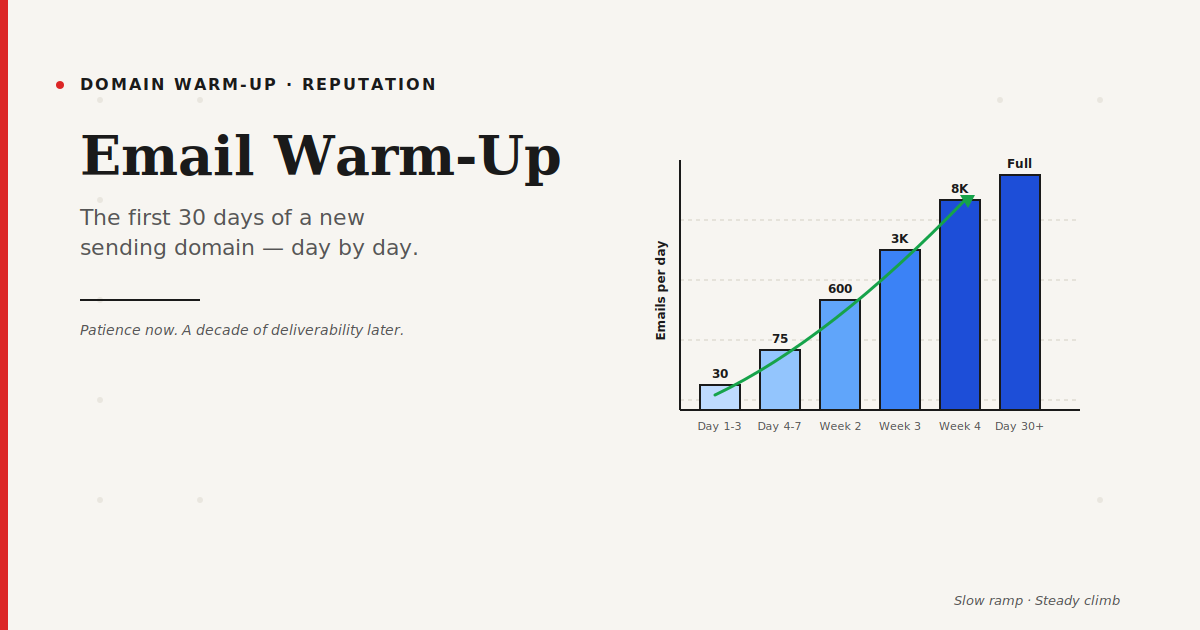
A practical 30-day email warm-up plan for new sending domains. Day-by-day guidance that actually protects your deliverability.
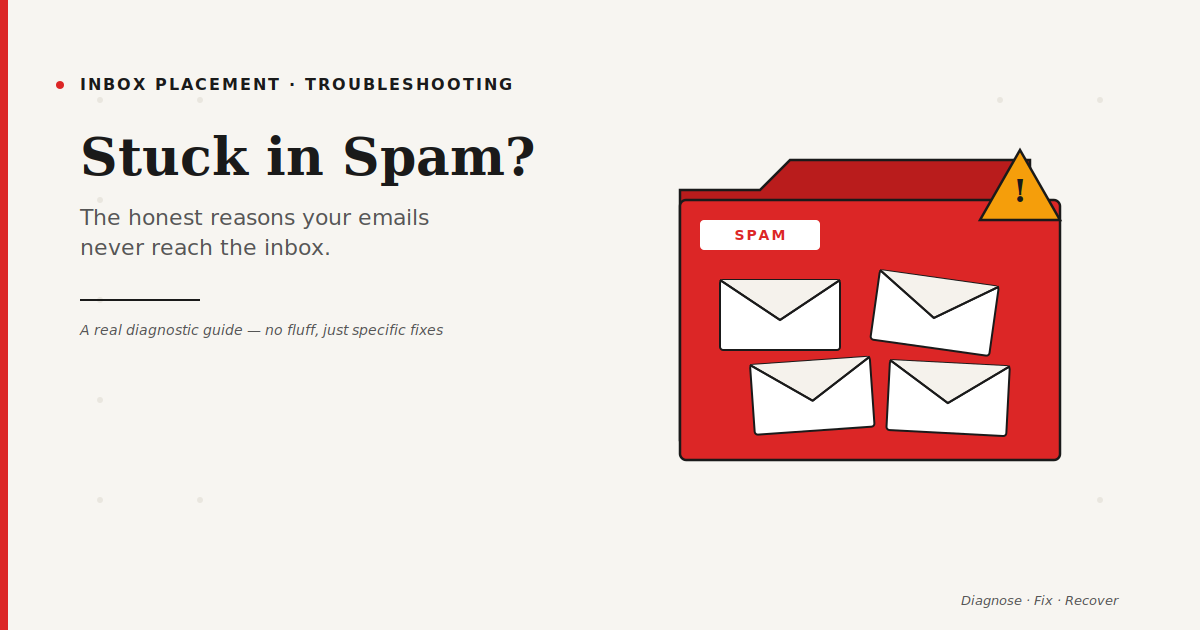
The honest reasons your emails are landing in spam — and the specific fixes that actually work. No fluff, just a real diagnostic guide.